He Closes 96% of New Patients in a Town With 16 Chiropractors
An associate told Dr. Andy Amor he could open across the street and never match them. He did it anyway. Compass Chiropractic in Whitefish, Montana opened with 147 patients already scheduled, hit 500 visits a week in year one, and closed 96% of new patients last year. In a town of 7,000 with 16 chiropractors.
Episode Details
Somebody sat across a table from Dr. Andy Amor and told him he could open a practice across the street and would never do as well as they did. Andy is pretty upfront that he's fueled by that kind of thing. So he opened up in Whitefish, Montana. Town of 7,000. Twelve or thirteen other practices inside a two-mile radius. Coaching group told him it was a crazy idea. Family friends told him it was a crazy idea.
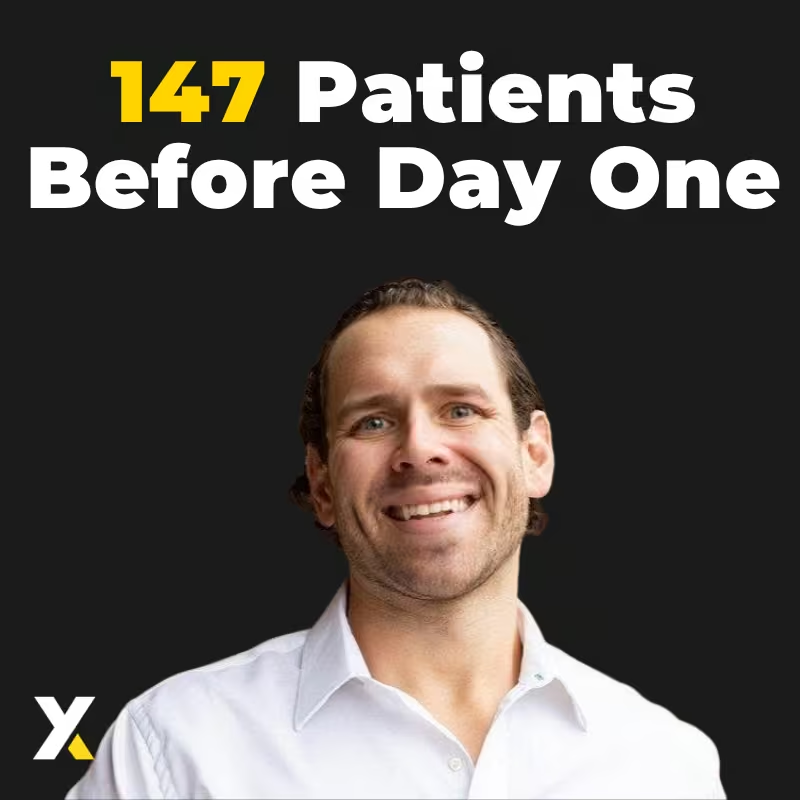
He and his wife Kaylee opened the doors with 147 new patients already on the schedule. Not 147 leads. Scheduled.
How? Coffee. He says he drank about eight coffees a day for six months meeting anybody who'd sit down with him. Chamber, business groups, whoever. They had to take a loan out to open, so there was no money for ads. Just him, a lot of caffeine, and a genuine obsession with the town they'd picked. Year one they hit 500 patient visits a week working three and a half days with Kaylee, Andy, and one team member.
Eight years later it's four docs, seven staff, about 450 visits a week, and prices more than double what they started at. Same volume, double the price. Andy's read on why most chiros underprice: it's scarcity, and it's coming from the doctor, not the market. His actual stated career goal is for his care plans to cost more than a spinal surgery. He knows how that sounds. He said it anyway.
Then there's the 96% close rate, which is the number that made me stop the conversation. (Daniel Bai (Ep 39) came at this same problem from the sales-training side. Andy gets there a completely different way.) His framing: "people don't say no to us, we say no to people." He doesn't adjust on visit one. Takes X-rays, the whole doc team reviews the case, and day one is entirely about the patient (Mountain Valley water, a welcome board with their name on it, an assistant in the room taking notes so two people are fully present). Day two he gets assertive. Here's the problem, here's what it takes, here's the cost, and the price lands at the very end right before the first adjustment.
He also doesn't believe in objections. Those are questions, concerns, or complaints. "That's expensive." Yeah, it is. "I need to talk to my spouse." Cool, so would I, I don't spend a couple grand without talking to Kaylee. Then he adjusts them anyway, books the next appointment, and sends them home to think. Over 90% come back. He had exactly one person not come back all year.
The other thing worth your time here: he closed a profitable second location on purpose. (Corey Malnikof (Ep 50) talks about chiros going from one office to two to three to zero. Andy saw the exit ramp and took it.) Satellite adjusting studio 25 minutes out, twelve hours a week, low overhead, made money. He shut it down two months before we recorded because he couldn't find an associate who fit, and going back and forth was draining him. "It was really good, but it was never gonna be great." The lesson he pulled out is that he built the location first and went looking for a doctor after. Next time, doctor first, then build around them.
We also get into working with your spouse without torching the marriage (separate roles, zero business talk at home, weekly business meetings AND weekly marriage meetings, a shared iPhone notes page as the parking lot), why he hires connectors instead of task-doers ("you can't teach a person how to person"), and the community events he runs that anybody can show up to whether they're a patient or not. Coffee and cold plunge mornings. Group climbs up the ski hill. Workouts in the park. His line on it: the goal isn't to talk about yourself, the goal is to get other people talking about you.
Key Takeaways
- 96% Close Rate, and It's Not Scripts. Andy's frame: "people don't say no to us, we say no to people." No adjustment on visit one. X-rays, full doc-team case review, and a day one built entirely around the patient. Day two he's assertive, names the problem, and prices it at the very end right before the first adjustment.
- 147 Patients Scheduled Before Opening Day. Six months of coffee dates, roughly eight a day. No ad budget, they'd taken a loan just to open. He doesn't count any of it as wasted time even when it didn't produce a patient, because it taught him how to talk to the next person.
- Objections Aren't Real. They're Concerns. "That's expensive." Yeah, it is. "I need to talk to my spouse." Same, I don't spend a couple grand without asking Kaylee. Then he adjusts them anyway, books the next visit, and lets them go think. Over 90% come back. One person didn't, all year.
- Doubled Prices, Same Volume. Andy started cheap because he wanted to reach everybody. Prices are now more than double and he sees roughly the same number of people. His read: underpricing is a scarcity problem inside the doctor, not a market problem. His stated goal is care plans that cost more than a spinal surgery.
- He Closed a Profitable Location on Purpose. The satellite made money on paper. He shut it down anyway because he couldn't find an aligned associate and the back-and-forth was draining. "It was really good, but it was never gonna be great." The mistake he names: he built the location, then went looking for a doctor. Do it the other way around.
- Hire Connectors, Not Task-Doers. He doesn't hire for GHL or EHR skills. He hires people who can sit across from somebody and connect. "I can teach somebody tasks. You can't teach a person how to person." Team tenure is six years, five, four, three, and nobody's left.
- The Trust Gap Isn't What You Think. Most owners worry an associate can't do the job as well as they can. Andy doesn't hire them if he believes that. His actual worry: they won't tell him when they're burned out or feeling like a failure. So he built the relationship where they will.

Ready to Implement These Strategies?
Our team helps 7-figure chiropractic clinics implement the exact systems and strategies discussed on The ChiroX Show. Let's see if we're a good fit for you.
Limited to 5 new partnerships per quarter • For chiropractic practices doing $1M+ in annual revenue
Related Episodes

Why 80% of Patients Leave by Visit 3
Dr. Daniel Bai of CloseForChiro on why 80% of new patients leave by visit 3, why sales is a learnable skill, and why the yes happens in the first 4 minutes.
He Built 24 Chiropractic Clinics From $4 in His Pocket
Dr. Corey Malnikof runs Palmer Care Chiropractic: 24 clinics, 150 team members. The $4 origin story, the four operating levers, and why most multi-location chiros go from 1 to 2 to 3 to 0.

Why You Shouldn't Build a Practice on Your Personality
Dr. Dennis Short runs 28 insurance-based clinics in Kentucky. Why a practice built around your personality stalls, and the systems that scale past you.

Why Most Chiropractic Practices Are Worth Almost Nothing on Exit
Dr. Kris Arnold runs a multimillion-dollar practice in rural Pennsylvania and is the incoming president of the PCA. Why most practices don't sell, the EOS/Traction operating system, and the 5-hire associate arc.

Why 80% of Chiropractors Shouldn't Own a Practice
Dr. Steve Judson runs 6 clinics built on one specialty: the atlas. Why most doctors aren't wired to own, and the L1/L2 model that keeps associates around.
How He Launches Every Associate to 100 Visits in 100 Days
Dr. Brian Morris runs Morris Chiropractic in Painesville, OH doing $300K/month. His 100 in 100 associate launch system, the marketing six-pack, and the base-pay-or-percentage comp model.